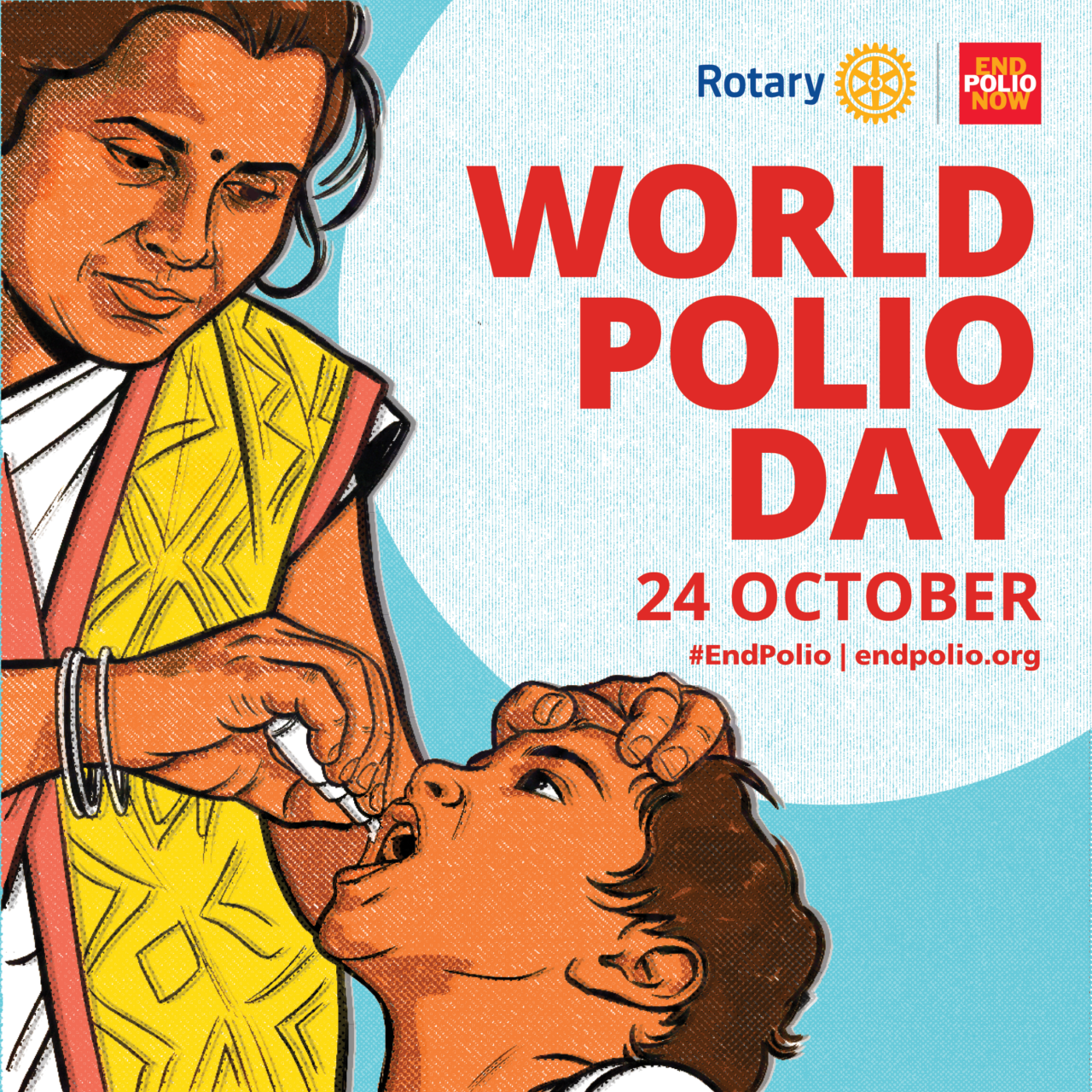
As long as polio exists anywhere in the world, it is a threat to children everywhere.
In 1988, an estimated 350,000 children were paralyzed by wild polio across more than 125 countries.
20 million people are walking today who would have otherwise been paralyzed by polio.Today, thanks to the work of Rotary and our partners, we have reduced cases by 99.9%.
In 2026 wild polio remains endemic in Pakistan and Afghanistan, and variant polio outbreaks threaten the progress we have made against the disease. We must also keep all other countries polio-free until we’re certain it won’t resurface.
*In New Zealand the polio vaccination is free and is given as part the diphtheria, tetanus, whooping cough, polio, hep B, and Hib vaccine.
This vaccination is free for babies at 6 weeks, 3 months, and 5 months. Your pēpi (baby) needs all 3 doses to be fully protected. It protects against 6 vaccine-preventable diseases in 1 injection.
In Aotearoa, immunisation against polio started in 1961. Before polio vaccines were available, nearly every person became infected; with babies and young children most affected.
There is no cure for polio — it can only be prevented by immunisation.
Until polio is completely eliminated overseas, there is still a risk of polio being imported into Aotearoa New Zealand.
(*Ref: Te Whatu Ora Health New Zealand)
In 1979, a boy named Allan Evangelista received one of the first drops of the oral polio vaccine in the Philippines as part of Rotary’s first polio immunization campaign. Nearly five decades later, an unexpected discovery reconnects Allan and his family with that important moment in history.
Watch the video here